Road Contractor Insurance Coverages

Purpose-built policies for highway paving, bridge construction, road grading, and asphalt contractors — with the right limits, correct endorsements, and carriers that actually understand DOT work.

Six Core Coverages for Road Contractors

Generic commercial insurance won't cut it on a highway project. Each coverage below is structured for the actual exposures you face — from right-of-way liability to DOT umbrella requirements.

1. General Liability

Covers third-party bodily injury and property damage arising from your road construction operations, completed work, and job-site presence on public right-of-way.

  • Third-party bodily injury and property damage (BI/PD) on and adjacent to job sites
  • Right-of-way operations liability — access to public roads, easements, and TXDOT/GDOT corridors
  • Excavation and trenching liability for utility conflicts and soil movement
  • Completed operations coverage for road surfaces, base material, and pavement failures post-completion
  • Products liability for materials supplied (aggregate, asphalt mix, concrete)
  • Personal and advertising injury (PI/AI) for project signage and public notices
  • Contractual liability for indemnification clauses in DOT prime contracts and subcontracts
  • Explosion, collapse, and underground (XCU) coverage available by endorsement

2. Commercial Auto / Hired & Non-Owned Auto

Fleet coverage engineered for the heavy, specialized vehicles that road contractors operate — from dump trucks and asphalt pavers to pilot cars and crew transports.

  • Dump trucks, tandem axle trucks, asphalt pavers, and vibratory rollers as scheduled vehicles
  • Motor graders, skid-steers, and water trucks (when licensed for road use)
  • MCS-90 endorsement for contractors performing federally funded highway work
  • Scheduled fleet coverage with agreed-value options for specialty equipment
  • Blanket fleet policies for high-turnover equipment rosters
  • Hired auto coverage for leased or rented vehicles used on projects
  • Non-owned auto for employees using personal vehicles for site errands
  • Uninsured/underinsured motorist coverage for crew vehicle accidents in active work zones
  • Loading and unloading coverage during material transfers on site

3. Workers' Compensation

Highway construction is among the most hazardous occupations in the U.S. Proper workers' comp coverage uses the right NCCI class codes so your premiums reflect actual risk — not worst-case assumptions.

  • Medical benefits, wage replacement, and vocational rehab for injured road crew members
  • Coverage for fall, crush, and struck-by injuries from passing traffic in active work zones
  • Asphalt heat exposure, respiratory hazards, and chemical burns from solvents
  • Flaggers and traffic control personnel (often overlooked — these are separate NCCI codes)
  • Correct NCCI codes: 5506 (street paving), 5507 (bridge construction), 5213 (concrete work), 5222 (excavation)
  • Employer's liability coverage (Part B) for crew suits alleging negligent conditions
  • Payroll audit management to avoid post-policy surprises
  • Experience modification rate (EMR) review and improvement planning

4. Contractor's Equipment (Inland Marine)

Your paver costs $500,000. Your milling machine cost $800,000. Standard commercial property policies won't cover mobile equipment in the field. Inland marine fills that gap.

  • Asphalt pavers, concrete pavers, and slip-form paving machines
  • Vibratory compactors, pneumatic rollers, and padfoot compactors
  • Cold milling machines and reclaimer/stabilizers
  • Motor graders, scrapers, and finish graders
  • Dump trucks classified as mobile equipment (off-road use only)
  • Blanket coverage available for contractors with large, frequently rotating fleets
  • Scheduled coverage with agreed-value per item for high-value single machines
  • Coverage for theft from job sites, loading/unloading accidents, and vandalism
  • Rental reimbursement while damaged equipment is being repaired
  • Leased and rented equipment can be added as additional interest

5. Professional Liability (E&O)

Road contractors who provide design-build services, perform pavement design review, or advise on traffic engineering face professional liability exposures that general liability explicitly excludes.

  • Errors in road design review and pavement thickness specification
  • Traffic engineering overlap — contractors advising on signal timing or lane configurations
  • Pavement structural failure claims tied to specification errors vs. construction defects
  • Survey and staking errors leading to misaligned road segments
  • Claims-made policy form with tail (extended reporting period) options
  • Defense costs inside or outside the limit depending on carrier selection
  • Protection for design-build subcontractors and engineering consultants on your roster

6. Umbrella / Excess Liability

DOT contracts and project owners regularly require $5M to $25M in umbrella limits. A single catastrophic right-of-way incident — involving multiple vehicles or fatalities — can exhaust primary limits instantly.

  • Excess limits of $5M, $10M, $15M, and $25M available from specialty carriers
  • Follows form over GL, commercial auto, and employer's liability
  • Satisfies project owner and DOT umbrella requirements for prime contracts
  • Catastrophic right-of-way incident coverage — multi-vehicle, multi-claimant events
  • Drop-down coverage when primary limits are exhausted or a gap exists
  • Available on a per-project basis for large infrastructure contracts
  • Aggregate and per-occurrence limit structuring to match contract schedules
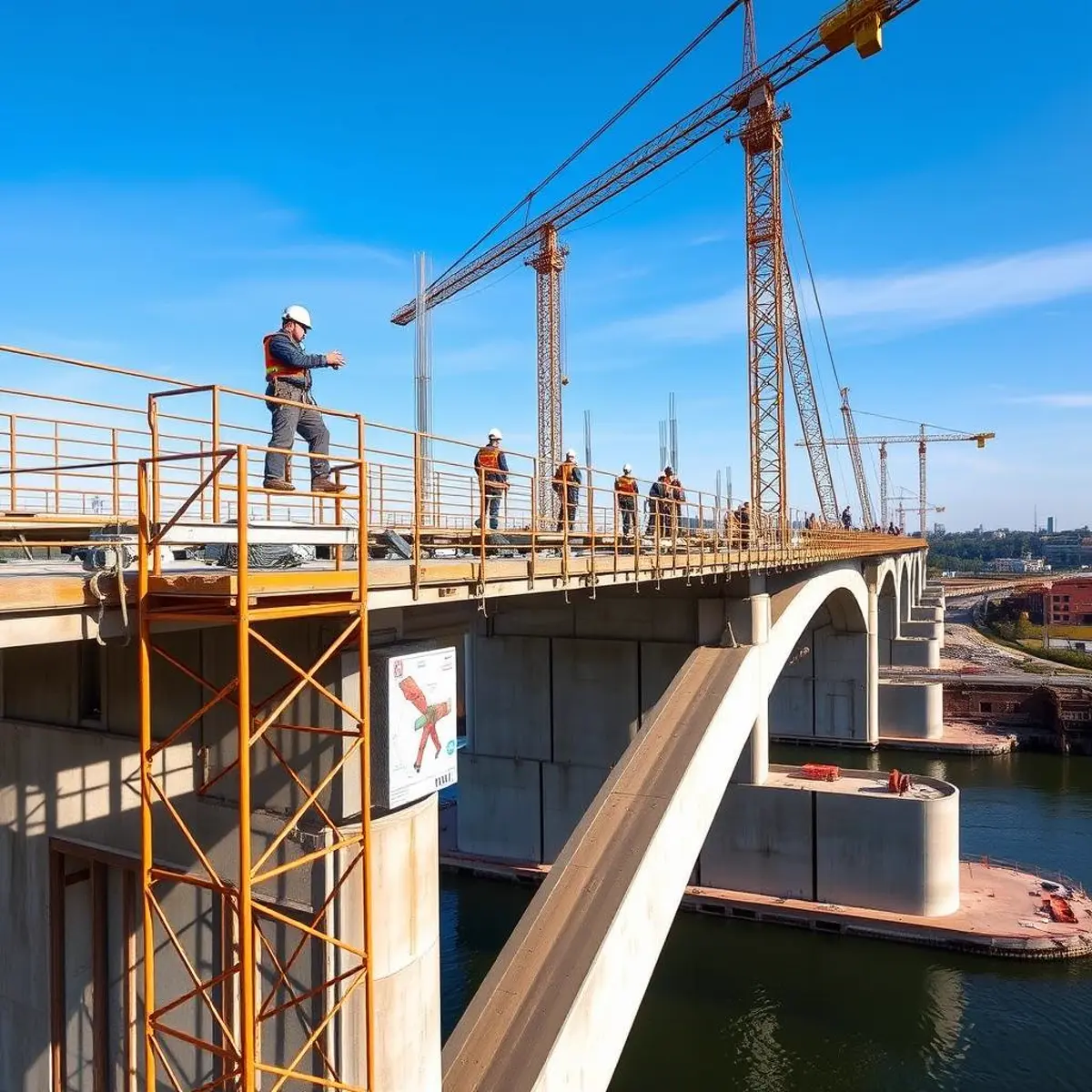
Bridge construction project showing road contractor operations requiring specialized insurance coverage

What Standard GL Misses on Highway Projects

A standard commercial general liability policy written for a general contractor is not the same as one structured for road and infrastructure work. These three exclusions catch highway contractors off guard every year.

  • Traffic Control Exclusions: Many standard GL policies exclude BI/PD arising from inadequate traffic control — the most common cause of work-zone fatalities. You need an explicit traffic control operations endorsement or a carrier that does not exclude it.
  • Subsidence Exclusions: Compaction work, heavy roller passes, and deep-cut milling can cause subsidence in adjacent structures. Standard policies exclude subsidence entirely. Infrastructure-specific GL either removes this exclusion or adds coverage by endorsement.
  • Underground Utilities (XCU): Hitting an unmarked gas, water, or telecom line during excavation or milling is excluded under the standard X, C, and U exclusions. XCU coverage must be specifically added — and many road projects require it in the contract.

What proper road contractor GL includes:

  • Traffic control operations — flaggers, K-rail, lane closures
  • XCU coverage by endorsement or carrier manuscript
  • Right-of-way and easement operations
  • Completed operations for asphalt and concrete surfaces
  • Contractual liability for DOT indemnification requirements
  • Blanket additional insured for owner/DOT agencies

Recommended Limits by Contractor Size

These are starting-point benchmarks. Actual DOT contract requirements, project size, and prior loss history will influence final limit selection.

Coverage Small (<$5M Revenue) Mid ($5M–$25M Revenue) Large ($25M+ Revenue)
General Liability — Per Occurrence $1,000,000 $1,000,000–$2,000,000 $2,000,000
General Liability — General Aggregate $2,000,000 $2,000,000–$4,000,000 $4,000,000–$6,000,000
Completed Operations Aggregate $2,000,000 $2,000,000–$4,000,000 $4,000,000
Commercial Auto — CSL $1,000,000 $1,000,000–$2,000,000 $2,000,000
Workers' Comp — Statutory Statutory Statutory Statutory
Employer's Liability (Part B) $500,000 / $500,000 / $500,000 $1,000,000 / $1,000,000 / $1,000,000 $1,000,000 / $1,000,000 / $1,000,000
Contractor's Equipment (Inland Marine) $250,000–$500,000 blanket $500,000–$2,500,000 blanket or scheduled $2,500,000+ scheduled per item
Professional Liability (E&O) $500,000 (if applicable) $1,000,000 $2,000,000–$5,000,000
Umbrella / Excess $2,000,000–$5,000,000 $5,000,000–$10,000,000 $10,000,000–$25,000,000
Total Program (Estimated Annual Premium) $18,000–$55,000 $55,000–$180,000 $180,000–$600,000+

Premiums are illustrative estimates. Final pricing depends on payroll, fleet size, loss history, states of operation, and DOT contract requirements. Contact us for an accurate quote.

Get a Road Contractor Insurance Quote

Our specialists understand DOT contracts, highway GL, and the right NCCI codes. Get a tailored quote in 24 hours or less.

Call 844-967-5247 Start Online Quote